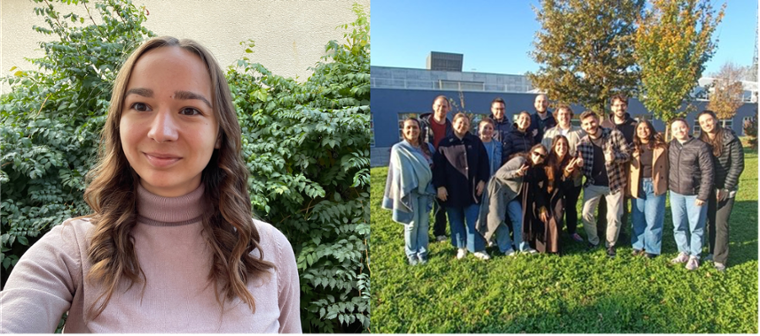
I’m a second-year undergraduate student in Economics and Management + Design, and I recently took part in the EUTOPIA Ideas Club 2025, which took place over two days (October 9th and 10th) at the University of Ljubljana.
On the first day, we engaged in a debate simulation on migration and asylum policies in Europe. It was an enriching experience that allowed us to better understand the perspectives of different countries. What we often think we know from the outside can be very far from reality, but through this simulation, we learned about each country’s actual proposals, their stance on current and pressing issues, the actions or regulations they are implementing, and their future plans. This offered a comprehensive view of Europe’s overall position at what I believe to be a historical turning point. While most European countries continue to strongly uphold human rights and human dignity, opinions are becoming increasingly divided. There is a noticeable rise in countries placing greater emphasis on national security and border control, reflecting a gradual shift in priorities within parts of Europe.
On the second day, we had an open debate on the role of gender in international protection and migration. This discussion was particularly engaging because it was less structured, allowing for a more personal exchange of perspectives, experiences, and knowledge. We also attended two workshops — one on research and another on transparency. I particularly enjoyed the one on transparency. As an international student coming from outside Europe, I found it especially relevant and insightful, as it provided a general overview of how European citizens engage with democracy. Coming from a country where corruption is a significant issue, it was refreshing to see that, while corruption may exist in Europe, it is far less pervasive, and citizens have the means to hold their governments accountable. It was inspiring to see that European citizens genuinely have the power to demand democratic governance and that political leaders are expected to respect their citizens’ rights.
Overall, it was an amazing experience that provided valuable insights into Europe’s current situation regarding migration, asylum policies, and gender-based violence — particularly how these issues affect women and other vulnerable groups seeking international protection. The workshops offered a broader understanding of the challenges faced by both migrants and host countries, while also deepening my knowledge of how European institutions address these topics. Beyond the academic and thematic content, the experience also helped me strengthen important personal and professional skills such as negotiation, discussion, teamwork, and open-mindedness. It was a wonderful opportunity to connect with people from diverse backgrounds and to learn from their perspectives.