Built on the idea that meaningful scientific progress depends on openness and collaboration across institutions, the EUTOPIA_HEALTH Cross-University Mobility Programme for Young Researchers was created to support this vision by offering PhD students and early-career researchers (within 8 years post-PhD) from Widening universities the opportunity to engage in short-term, high-impact research experiences within the EUTOPIA_HEALTH consortium. Two PhD students from Babeș-Bolyai University (UBB) recently benefited from this opportunity, and their mobility experiences highlight the programme’s impact on research development, international collaboration, and academic growth.
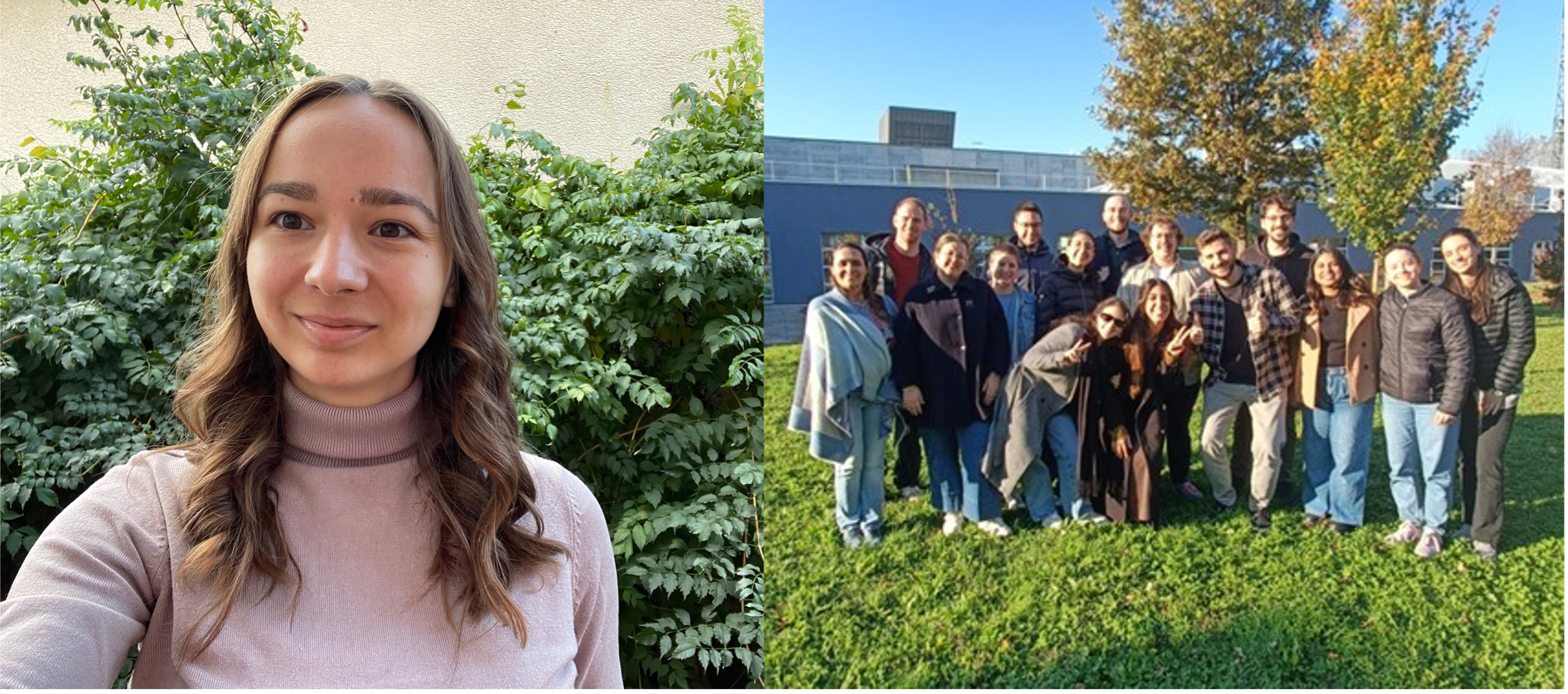
Emma Bobu, a PhD student at the Faculty of Physics, works in the field of biomaterials, with a particular interest in designing materials based on bacterial polysaccharides for tissue regeneration applications. For Emma, choosing NOVA University of Lisbon as her host institution for a three-month mobility was a natural fit, as the interdisciplinary focus of the research environment aligned closely with her own work. During her stay, she was mentored by Dr. Filomena Freitas, an expert in biomaterials as well as environmental and chemical engineering.
“During my stay, I collaborated with the Department of Chemistry. The research field I have chosen is interdisciplinary, requiring expertise from physics, chemistry, anatomy, and other related areas. For this reason, I considered that collaborating with chemists would enhance my knowledge in the field of natural material production, which indeed proved to be the case.”
Emma agrees that the experience was both valuable and practically useful and is already applying the knowledge and skills acquired in order to further develop her research field and the associated synthesis processes.
“During the mobility period, I learned which instruments and equipment are used in the production of bacterial cellulose, which was the polysaccharide of my interest, as well as the laboratory conditions that are most favourable for its synthesis. I was particularly impressed by the level of cleanliness and organization within the research team; each member was aware of their responsibilities in maintaining a clean working environment to prevent contamination. Additionally, I observed how various materials are produced on a larger scale using green synthesis approaches.”
Codruț Costinaș is also following his PhD studies at the Faculty of Physics and is working in material science. Codruț chose Ca’ Foscari University of Venice for the opportunity to work closely for five months with Professor Flavio Rizzolio and his research group, whose work in cancer nanomedicine aligned closely with his own research interests in nanomaterials. Rather than selecting a host institution based on its general reputation, his decision was driven by the prospect of joining a research team with a scientific focus and methodological approach well suited to his ongoing work.
“The mobility allowed me to explore how the nanomaterials I study from a materials science and physics perspective can be applied, tested, and integrated within well-known lipid systems with which the Ca’ Foscari group had expertise. The connection between my expertise and working closer to biological systems was an important aspect of my work during the stay and significantly improved my understanding of how my research fits into a broader medical context.”
During the mobility, he worked in a predominantly biology-oriented research environment, which strengthened his ability to collaborate and communicate across disciplines. The experience also contributed to the development of his analytical skills and provided exposure to advanced experimental methods and laboratory infrastructure, offering insight into how large, interdisciplinary research groups integrate diverse expertise to address complex scientific challenges.
“This mobility experience had a strong impact on both my research and my outlook on my future career. Scientifically, it helped me learn a lot of new things, which will help me better position my PhD work in the subject of nanomedicine, emphasising the importance of material design in biological and medical settings. On a broader level, the experience confirmed my interest in interdisciplinary research and in working at the interface between physics, materials science, and biology. It also gave me valuable insight into what it means to work in a highly advanced research environment, which will influence my choices when considering future postdoctoral positions or collaborations.”
Looking back, both Emma and Codruț encourage other PhD students and early-career researchers to consider applying for a Cross-University Mobility opportunity within EUTOPIA_HEALTH. Even short mobilities, they note, can make a real difference by offering exposure to new research environments, ways of working, and academic cultures. Working in a different setting, sometimes outside one’s usual discipline, helps develop flexibility, confidence, and a fresh perspective on one’s own research. Just as importantly, the programme creates opportunities to meet people, build connections, and lay the groundwork for future collaborations. For them, the experience proved that stepping slightly outside one’s comfort zone can be both professionally rewarding and personally enriching.
Interested in a similar experience? The current
call for the EUTOPIA_HEALTH Cross-University Mobility Programme is now open—learn more and apply.