
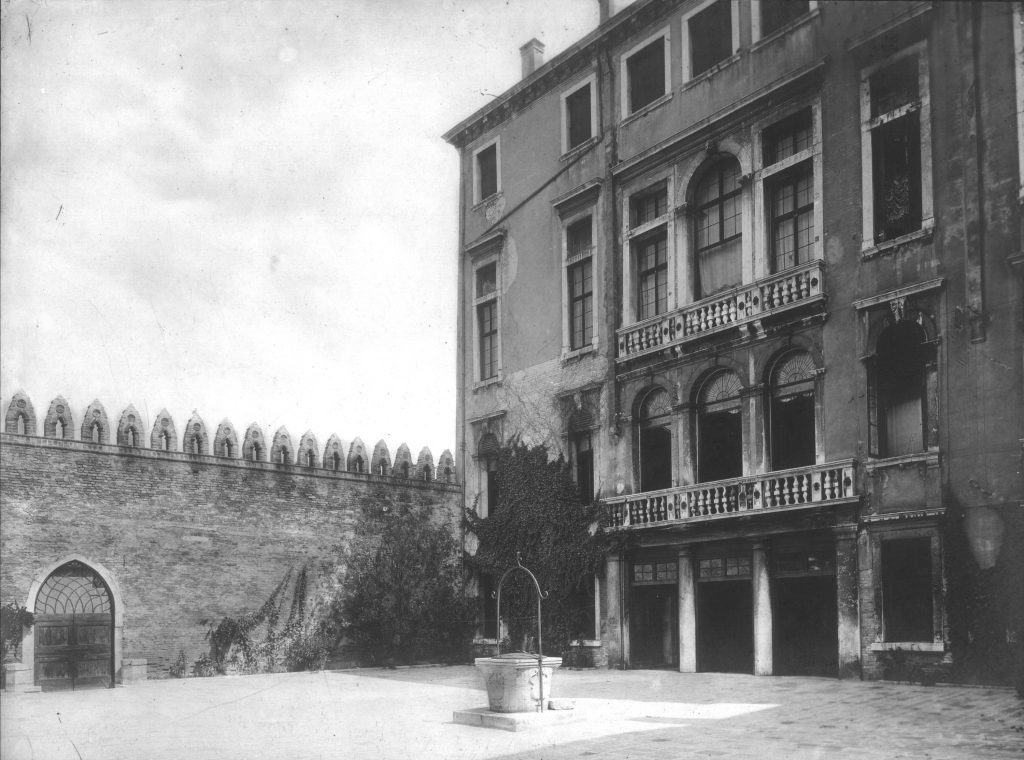
Ca’ Foscari University is known today for its international outlook and innovative research, yet one of its most fascinating features lies in its architectural and historical heritage. Long before it became the seat of a university, the Gothic palace of Ca’ Foscari was already at the centre of Venice’s history, hosting doges, kings, artists, soldiers, and eventually generations of students. Here is a journey through some of the most intriguing moments hidden in our main building’s past.
From the “House of the Two Towers” to a Doge’s residence (1429 – 1453)
The story begins in 1429, when the Republic of Venice acquired the ‘Casa delle due Torri’, a building known for its two side towers and its strategic position on the widest curve of the Grand Canal, the ‘Volta de Canal’. In 1453, the property was put up for auction and purchased by Francesco Foscari, who at the time served as Doge – the political leader of the Venetian Republic. Foscari had the structure rebuilt as his private residence, giving rise to the palace that would later bear his name: Ca’ Foscari.
A Stage for Diplomacy (1574)
After the Doge’s death, the palace remained in the family and became a venue for receiving important guests. One of the most illustrious visits occurred in 1574, when Henry III of Valois, King of France and Poland, stayed at Ca’ Foscari. It was such a major political event that Italian princes gathered in the palace to pay him homage. The palace thus entered the European political scene as a space of high-level encounters.
A Landscape Celebrated in Art (1740)
The palace’s stunning location attracted not only kings, but also painters. In 1740, legendary Venetian artist Canaletto likely painted his famous ‘Regata sul Canal Grande’ from one of Ca’ Foscari’s upper floors, as the building had front-row seats to one of Venice’s most iconic gondola races.
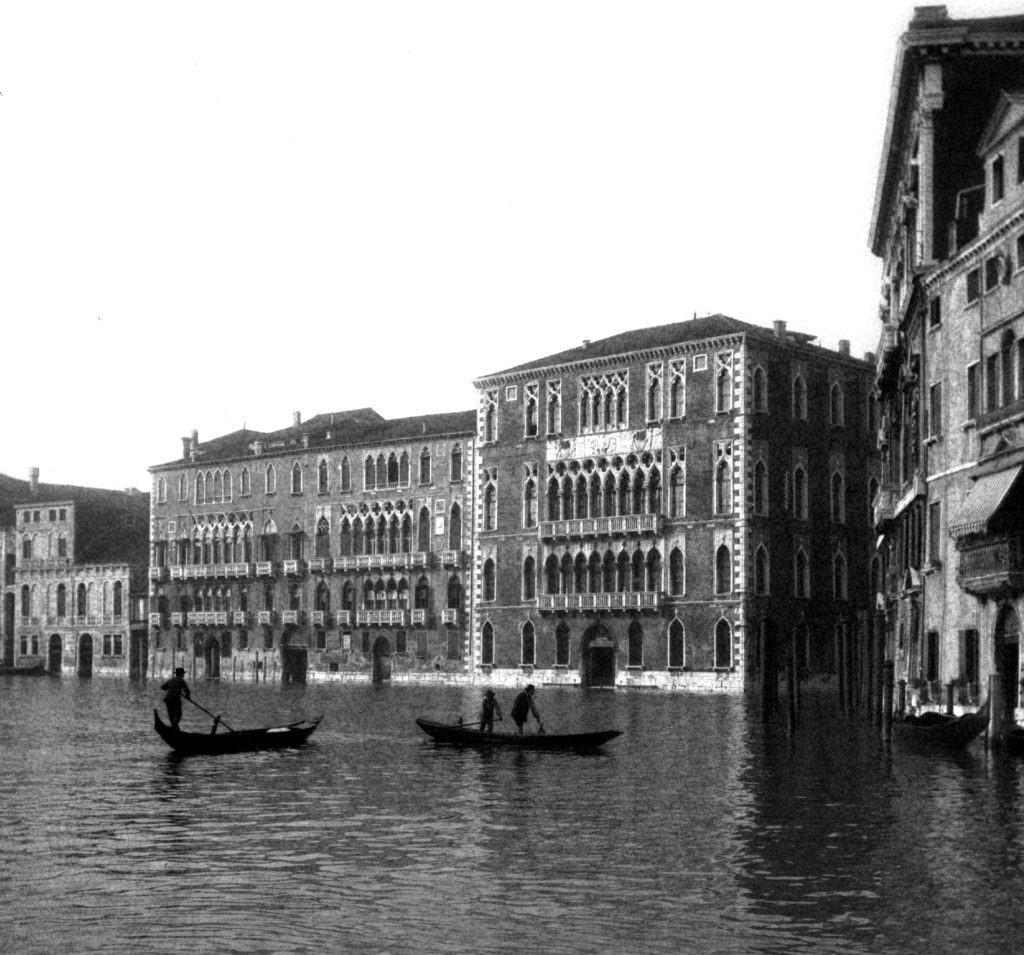
Ca’ Foscari University is known today for its international outlook and innovative research, yet one of its most fascinating features lies in its architectural and historical heritage. Long before it became the seat of a university, the Gothic palace of Ca’ Foscari was already at the centre of Venice’s history, hosting doges, kings, artists, soldiers, and eventually generations of students. Here is a journey through some of the most intriguing moments hidden in our main building’s past.
From the “House of the Two Towers” to a Doge’s residence (1429 – 1453)
The story begins in 1429, when the Republic of Venice acquired the ‘Casa delle due Torri’, a building known for its two side towers and its strategic position on the widest curve of the Grand Canal, the ‘Volta de Canal’. In 1453, the property was put up for auction and purchased by Francesco Foscari, who at the time served as Doge – the political leader of the Venetian Republic. Foscari had the structure rebuilt as his private residence, giving rise to the palace that would later bear his name: Ca’ Foscari.
A Stage for Diplomacy (1574)
After the Doge’s death, the palace remained in the family and became a venue for receiving important guests. One of the most illustrious visits occurred in 1574, when Henry III of Valois, King of France and Poland, stayed at Ca’ Foscari. It was such a major political event that Italian princes gathered in the palace to pay him homage. The palace thus entered the European political scene as a space of high-level encounters.
A Landscape Celebrated in Art (1740)
The palace’s stunning location attracted not only kings, but also painters. In 1740, legendary Venetian artist Canaletto likely painted his famous ‘Regata sul Canal Grande’ from one of Ca’ Foscari’s upper floors, as the building had front-row seats to one of Venice’s most iconic gondola races.
A Difficult Chapter: The Austrian Occupation (1849)
The year 1849 marked a challenging moment in the building’s history. Following the Austrian reconquest of Venice, Ca’ Foscari was converted into military barracks. The change of use caused significant damage to both its decorative elements and its structure, highlighting the vulnerability of cultural heritage during periods of political upheaval.
A New Identity: Italy’s First School of Commerce (1868)
A turning point came in 1868 with the founding of the ‘Regia Scuola Superiore di Commercio’, shortly after Venice joined the Kingdom of Italy. Hosted in Ca’ Foscari thanks to a concession from the Municipality of Venice, it became the first institution in Italy dedicated to higher education in commerce and economics. Under the long directorship of economist Francesco Ferrara, it built the foundations of what would become a modern university.
A Growing University and a Master Architect (1935 – 1956)
In 1935 the Royal School of Commerce became a state university, which led to the creation of the Faculty of Economics and Commerce, followed in later decades by new faculties of Foreign Languages, Humanities and Sciences. Around the same time, architect Carlo Scarpa transformed parts of the building, designing the celebrated Aula Baratto and later, the elegant boiserie that people can still admire today. His work blends Venetian tradition with modern sensitivity.
Expanding the Main Building (1942 – 1956)
In 1942, the University expanded its premises with the purchase of Ca’ Giustinian dei Vescovi, a 15th-century palace adjoining Ca’ Foscari and formerly owned by the Giustinian family. The acquisition was finalised in 1966, further integrating the historic building into the university’s architecture.
A Historic Palace Leading the Way in Sustainability (2013 – 2025)
In recent years, Ca’ Foscari has demonstrated that architectural heritage and environmental responsibility can go hand in hand. In 2013, it became one of the oldest buildings in the world to receive the LEED EB: O&M certification for existing buildings. This milestone marked the beginning of a sustained effort to integrate sustainability into the daily management of a centuries-old structure. The commitment was recognised again shortly after: in 2018 the palace achieved the LEED Silver level, and in 2025 it reached the Gold level.