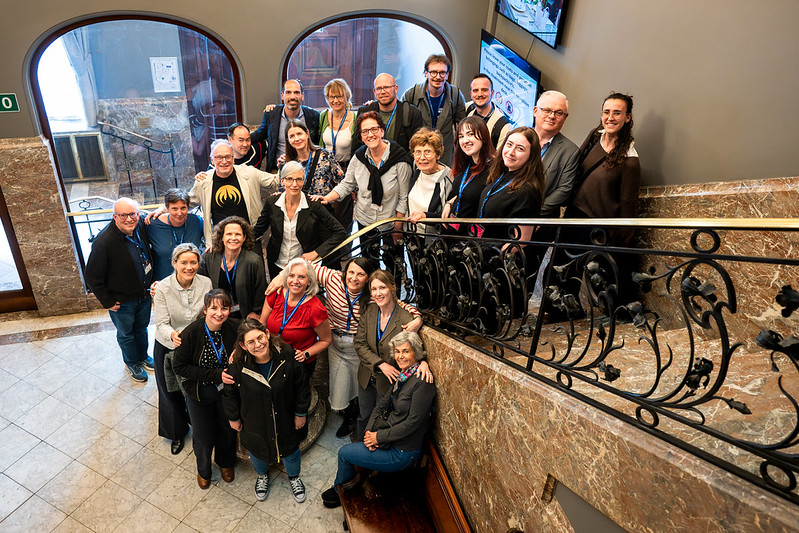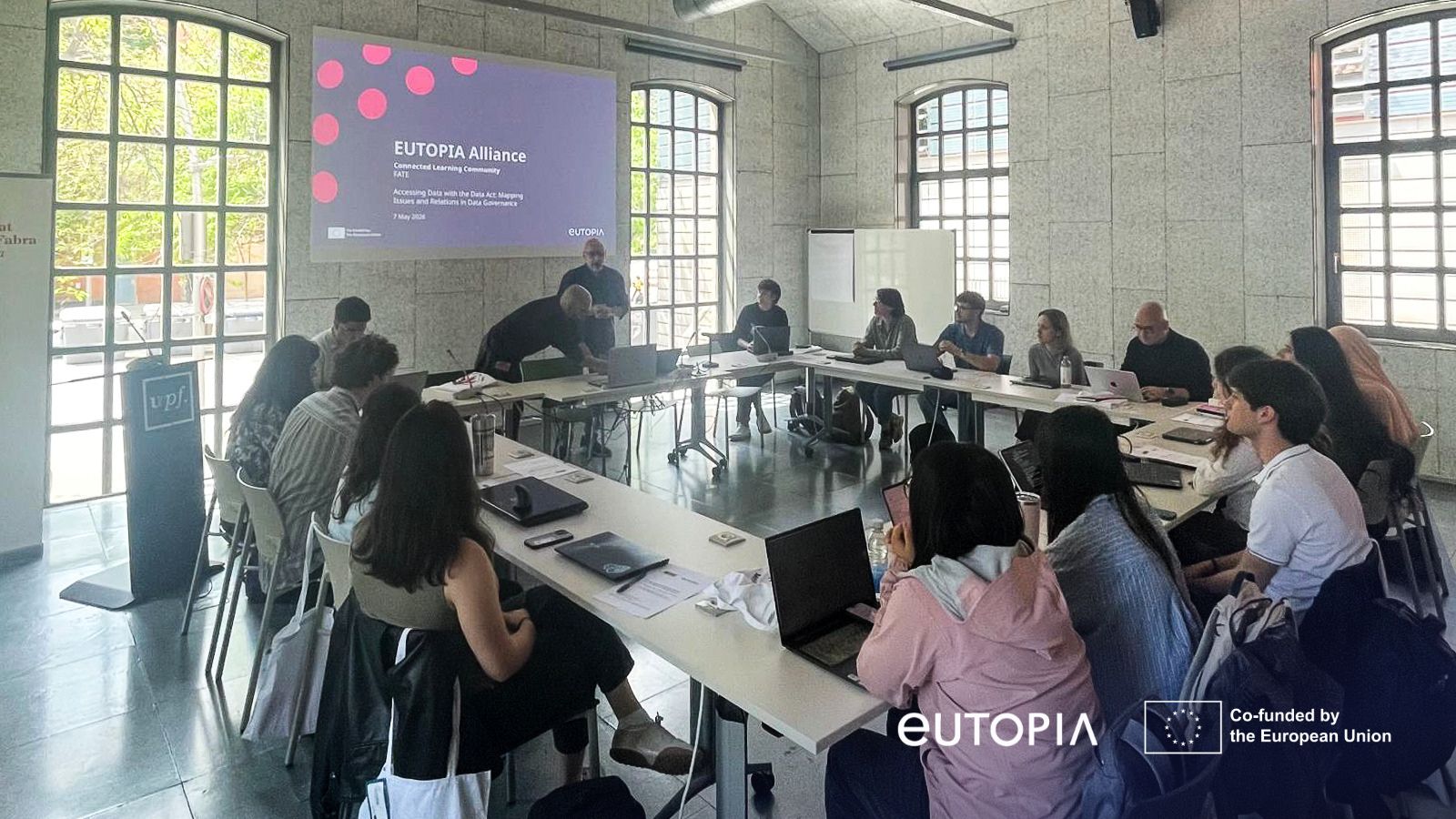
The FATE Connected Learning Community organised an international workshop on the new Data Act on May 7 and 8. The initiative brought together postgraduate students, researchers, and academics from several European universities to examine the challenges of data governance in the digital era.
The activity was led by Professor Carlos Castillo from the UPF Social and Responsible Computing Research Group, together with the other members of the CLC: Gloria González-Fuster, Noortje Marres, and Dimitris Kotzinos, from Vrije Universiteit Brussel, the University of Warwick, and CY Cergy-Paris University.
The workshop was structured around two intensive days combining theoretical explanations with practical activities.
The first day began with an analysis of documents and communications from major technology and industrial companies such as Volkswagen, Bosch, Samsung, Xiaomi, and Mitsubishi, in order to study how they interpret the European Data Act. Participants identified differences in the language used, the absence of key regulatory terms, and varying levels of clarity, opening a debate on the extent to which corporate interpretations align with the regulatory objectives of the European Union.
In a second activity, participants reflected on the potential uses of product data. They explored how such data could support research and help better understand social and technological phenomena such as smart cities, the digital economy, and climate change. Applications were also proposed in areas such as energy consumption, transport, and the labor market, highlighting the potential of data to generate knowledge and encourage behavioral change in society.
The second day focused on an activity mapping data relationships, based on datasets obtained from DSAR requests and APIs. Participants created diagrams to identify the main actors involved — including users, institutions, technologies, and data intermediaries — and to analyse power relations, dependencies, and possible accountability mechanisms within the data ecosystem.
The workshop concluded with presentations of the group work and a collective discussion on the lessons learned. The organizers emphasised the importance of continuing to critically analyse how data is produced, managed, and interpreted within the framework of the Data Act, and how this regulation may transform the relationships between citizens, companies, and institutions in the European digital economy.
This article was originally published on UPF’s website.