
University of Ljubljana (UL) was founded in 1919, with 23 faculties and 3 art academies. It is Slovenia’s oldest and largest higher education, scientific research, and art institution. The university fosters basic, applied, and developmental research.
UL ranks among the top 5 % of universities in the world. Their degree programmes range across all fields of study: Art, Fine Arts, Natural Science, Technology and Engineering, Social Sciences, Humanities, Medicine, Health Sciences, and Sports, all designed in line with the Bologna Process guidelines.
Each year, around 40,000 students increase and develop their knowledge and skills at our institution, including more than 9% of the student body comprised of international students from more than 100 countries.
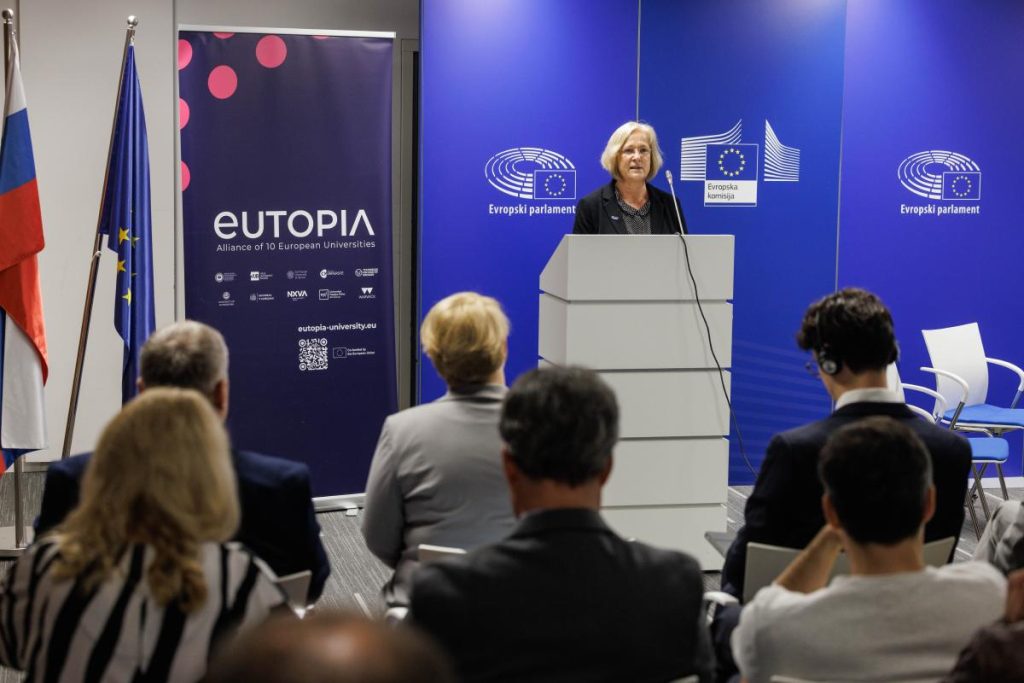
In cooperation with foreign universities, they conduct interdisciplinary and multidisciplinary studies and emphasise international exchanges of students and staff. They are actively involved in international partnerships and are a member of EUTOPIA.
“Every day, we pursue the University of Ljubljana’s vision of becoming an increasingly recognisable, internationally open and excellent research university that continuously and creatively contributes to raising the quality of life.”
In a few words
University of Ljubljana (UL) is the oldest, largest, and internationally best-ranked university in Slovenia, being among the top 500 universities according to the Academic Ranking of World Universities Shanghai ranking (ARWU). The university was founded in 1919 and encompasses 23 faculties, 3 art academies, and 3 associated members. It covers all scientific fields – natural sciences, engineering, social studies, humanities and arts.
In terms of the number of students, UL ranks among the largest HEI in Europe, with more than 37.000 undergraduate and postgraduate students. In terms of the number of employees, UL ranks as a medium-sized HEI and employs more than 6.600 employees, including around 3.500 academic staff.
UL is renowned for its quality social and natural sciences and technical study programmes, structured in accordance with the Bologna Declaration. Study programmes at UL cover all ISCED areas in the first and second-cycle study programmes and lead the way in some new developments in technology and research (cognitive science, nanotechnologies, environmental sciences, biomedicine, etc.).
UL is very active in national and international R&D and educational programmes, creating almost half of Slovenia’s research results. In 2023, UL researchers worked in 269 research groups on 186 national research programmes and 365 national research projects with more than 4.626 registered researchers.
UL strives to integrate sustainability in its various activities and processes. Moreover, it also regularly participates in new research and development projects aimed at the sustainable transformation of higher education through the partnership networks in which it operates.
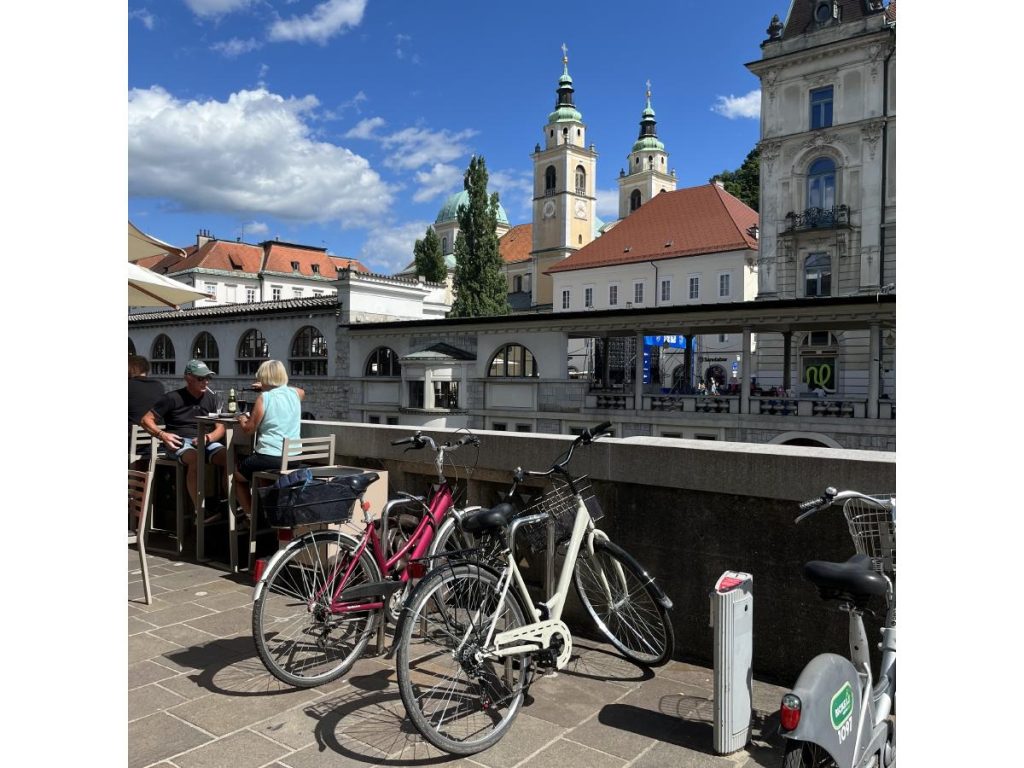
Our campus
Slovenia, officially the Republic of Slovenia, is a state in Central Europe at the crossroads of main European cultural and trade routes. It is a full member of the European Union since 2004. It borders Italy to the west, Austria to the north, Croatia to the south and southeast and Hungary to the northeast.
Since its foundation in 1919, the University of Ljubljana has been housed in a country mansion on Congress Square in the city centre of Ljubljana. The main building, the academies and many faculties are located in the city centre. The newer university buildings are located on the outskirts of Ljubljana, giving the university and its students an old-world feel in the city.
The university encompasses 23 faculties, 3 art academies, and 3 associated members. It covers all scientific fields – natural sciences, engineering, social studies, humanities and arts.
UL builds and strengthens the academic union of professors, researchers, students and other associates and aims at the university enforcement at home and in the world. The research, education, professional and public activities, as well as the relations between the community members, are based on the:
- academic excellence and the highest possible quality,
- academic freedom of the academic and other staff and students, especially the freedom of creativity,
- autonomy in relation to the state, political parties, corporations and religious communities,
- humanism and human rights, including equal possibilities and solidarity,
- ethical and responsible attitude towards the world.
In numbers
UL unites 26 faculties/academies (three art academies and 23 faculties) and five associate members (the National and University Library, the Central Technical Library of the University of Ljubljana, the Innovation and Development Institute of the University of Ljubljana, the National Institute of Biology and the Ljubljana Student Centre).
- Enrolled at UL: 37.402 students
- UL employs 6.891 teachers, researchers, assistant professors, professional and administrative staff
- UL ranks among 600 and 700 of the best universities in the world (Shanghai Ranking)
Excellence in research
The University of Ljubljana provides infrastructural support via the infrastructure programme of the University of Ljubljana »Network of Research and Infrastructural Centers UL (MRIC UL)«, which includes 33 infrastructural centres within 14 member faculties of UL. The infrastructure program plays an important role in supporting member faculties’ participation in international infrastructure projects of the European Strategy Forum on Research Infrastructures (ESFRI). The participation is implemented via member faculties’ infrastructure centres: Faculty of Social Sciences (CESDA and PLMER), Faculty of Pharmacy (EATRIS), Faculty of Medicine (ELIXIR and SiMBioN), and Faculty of Chemistry and Chemical Technology (E-RIHS) and other faculties.
UL is also very active in international research and education programmes. In the programming period 2014-2020, the UL altogether cooperated in approx. 980 European projects, including 195 H2020 projects, ranked UL first among the research organisations in the EU-13 countries. In 2023, UL was involved in 643 ongoing European projects. Up to the end of the year 2023, UL has been involved in 82 HORIZON 2020 and 140 HORIZON EUROPE projects (including 15 ERC grants, 3 Twinning projects and 47 Marie Skłodowska-Curie Actions), and 16 projects of the European territorial cooperation programme, among others. UL is currently involved in 676 active projects ranging from EU programs to international collaboration, like NIH, AFOSR and others. Within active projects, UL researchers are coordinating 110 projects from Erasmus+ to Horizon.
To protect the university’s intellectual property developed through publicly financed research projects and to improve the technology transfer from the university to the industry, a central university Technology Transfer Office was established in 2007. The university develops and accelerates research through the University Committee for R&D and Committee for Innovation, which comprises representatives from the most propulsive faculties. University Incubator and Institute for Innovation and Development and the Slovenian Innovation Hub are three other units in which the University of Ljubljana supports innovation and development in different ways, along with laboratories and other research units within Faculties.
Since 2008, UL has been committed to respecting the principles of the European Charter for Researchers and the Code of Conduct for Recruitment of Researchers, which led to the “HR Excellence in Research” award in 2013.
Information on projects in 2023
- 643 EU projects
- 186 research programmes
- 985 projects with industry or knowledge users (Slovenia and abroad)
The UL cooperates with organisations from economy and service in the public and private sectors, with state organisations, local communities, and civil society. This cooperation accelerates the use of own research and educational achievements and contributes to the social development. Its active responses to environmental events represent society’s critical conscience.
Sustainable development
At the UL, we recognise the important role that universities play and will continue to play in the development and dissemination of knowledge in the field of sustainability, thus fostering a deeper understanding of the need for a transformation towards a sustainable society. They represent and create a space for critical reflection on societal challenges and bring together researchers, innovators, students, employers, policymakers and local communities.
Our activities in this area, therefore, include:
- Engaging in critical reflection on the challenges and their complexity in the context of sustainable transformation.
- Fostering social dialogue on the challenges related to sustainable development.
- Monitoring and expanding our own behaviour and influence on systemic and behavioural changes that support sustainable transformation.
It is, therefore, about development that meets the needs of current generations without compromising the ability of future generations to meet their own needs. The key to achieving sustainable development lies in finding and maintaining a balance between the three interdependent dimensions – environmental, social, and economic – that are essential to the well-being of individuals and society. World leaders committed to this path by adopting the Sustainable Development Goals (SDGs) at the historic United Nations Sustainable Development Summit in 2015.