Communicating academic research to a wider audience is often a challenge for doctoral researchers. During the EUTOPIA Impact School 2025, participants had the opportunity to explore new ways of presenting their work through storytelling and short video pitches. Over the course of three intensive online sessions, doctoral researchers from different disciplines worked on their scientific texts, experimented with communication techniques and learned how to make complex research topics accessible to diverse audiences.
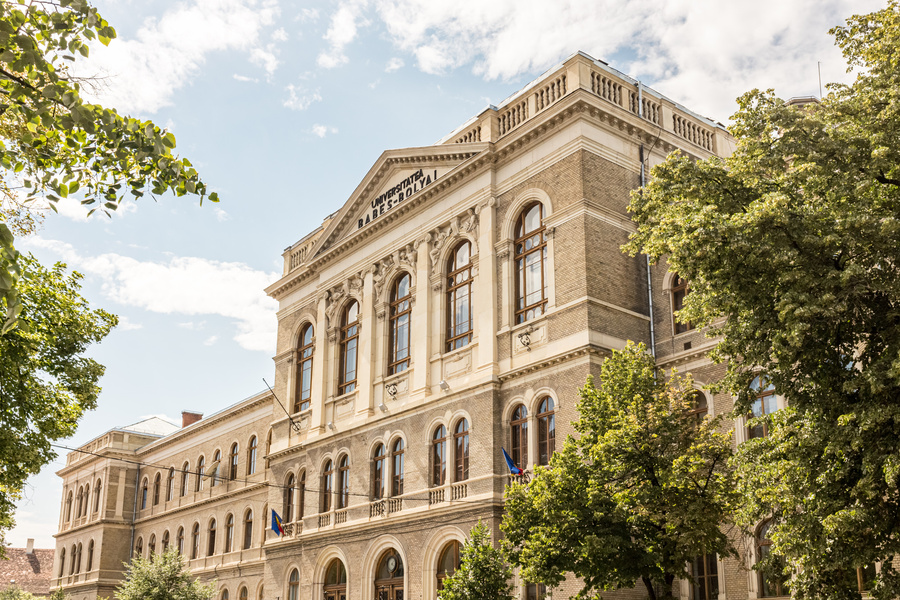
One of the participants was Diana-Ioana Nemeș, a PhD researcher in Communication Sciences at Babeș-Bolyai University in Cluj-Napoca, Romania. Her research focuses on sports branding, digital communication and the social impact of football clubs and their academies. In this interview, she shares her experience of the EUTOPIA Impact School and reflects on what she learned about communicating research beyond the academic environment.
1. What motivated you to participate in the EUTOPIA Impact School 2025?
As a doctoral researcher in Communication Sciences, I am particularly interested in how complex ideas can be communicated to diverse audiences. The EUTOPIA Impact School offered a unique opportunity to explore scientific communication in a practical way, especially through storytelling and video pitching. I was also curious to interact with doctoral researchers from different disciplines and to learn how they approach communicating their research. For me, it was both a learning opportunity and a chance to step outside my academic comfort zone.
2. What was your first impression when you joined the workshop?
One of my first impressions was the remarkable diversity of research topics represented in the group. During our first session, we spent time getting to know each other and discussing our research projects, which created a very open and engaging atmosphere. It was fascinating to see how researchers from very different fields approached similar challenges when trying to explain their work to a non-specialist audience.
3. The Impact School focuses strongly on storytelling and communication techniques. What did you find most valuable about this approach?
What I found particularly valuable was the very practical approach of the lecturers. Instead of focusing only on theoretical concepts, we worked directly on our own research texts and experimented with different ways of presenting them. The storytelling techniques helped me rethink how I structure my research narrative and how I can highlight the social relevance of my work in a more engaging way. This experience reminded me that good research communication is not only about accuracy, but also about clarity and connection with the audience.
4. The final project of the programme was a short video pitch. What was this experience like for you?
Creating the video pitch was both challenging and rewarding. Condensing a complex research topic into a short and engaging video of just a few minutes requires a completely different mindset compared to academic writing. It forced me to focus on the essential ideas of my research and to present them in a way that is accessible to people outside my field. At the same time, it was a very creative process that encouraged experimentation with presentation techniques and visual storytelling.
5. How would you describe the learning environment created during the programme?
The learning environment was very supportive and collaborative. I always felt comfortable sharing my ideas and receiving constructive feedback from both the lecturers and the other participants. There was a strong sense of mutual respect and curiosity, and the lecturers encouraged open discussion rather than traditional hierarchical teaching. This created a dynamic atmosphere where everyone could learn from each other.
6. How has the EUTOPIA Impact School influenced the way you think about communicating your research?
The programme made me more aware of the importance of translating academic research into language that is accessible to broader audiences. As researchers, we often communicate mainly within our own academic communities. However, initiatives like the EUTOPIA Impact School highlight how important it is to engage with society and share our research beyond disciplinary boundaries.
7. Would you recommend the EUTOPIA Impact School to other doctoral researchers?
Absolutely. I would highly recommend this programme to any doctoral researcher who wants to develop their science communication skills. It is an intensive but very rewarding experience that encourages participants to step outside their comfort zone, experiment with new forms of presentation, and learn how to communicate research to a diverse international audience.