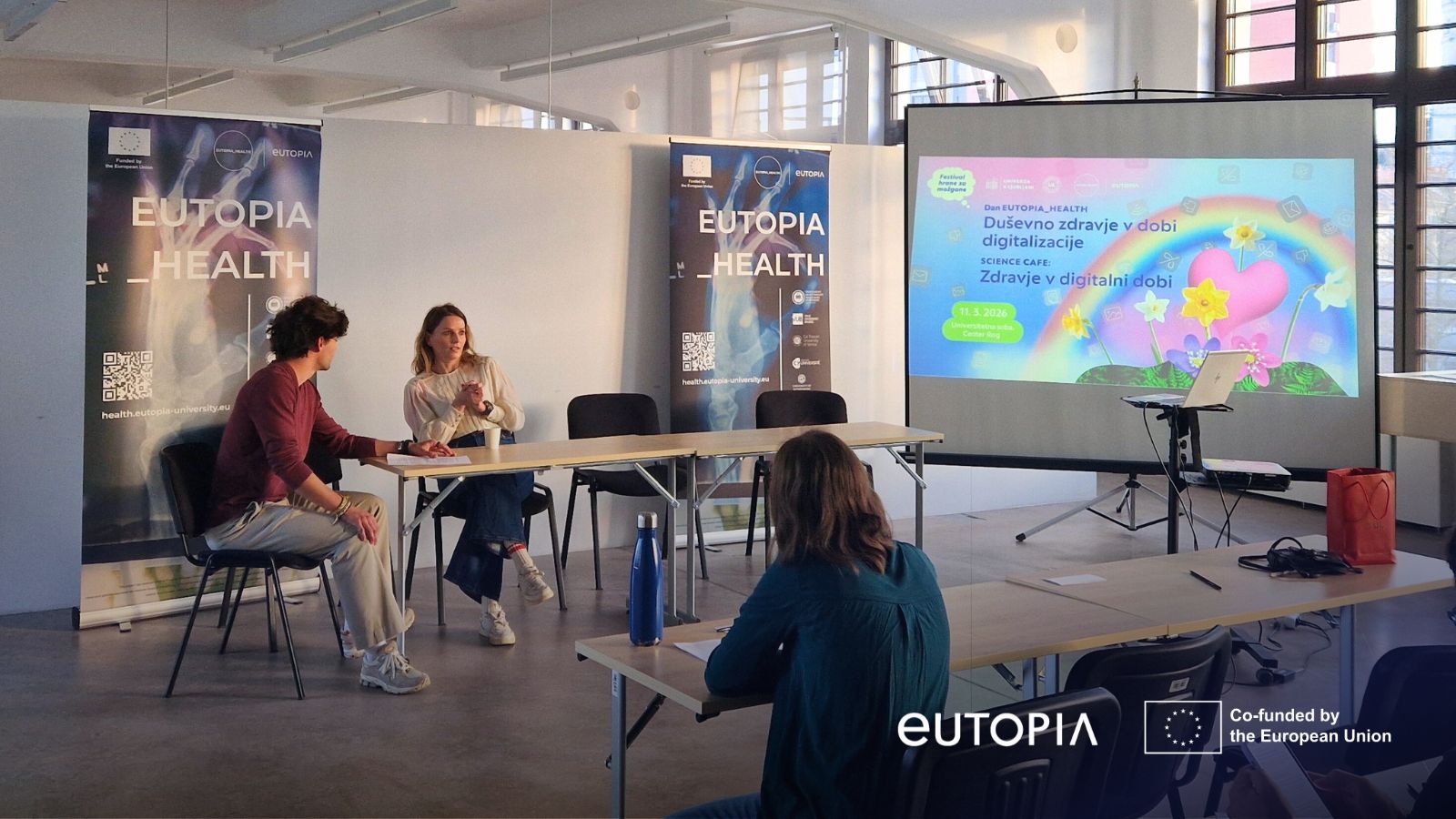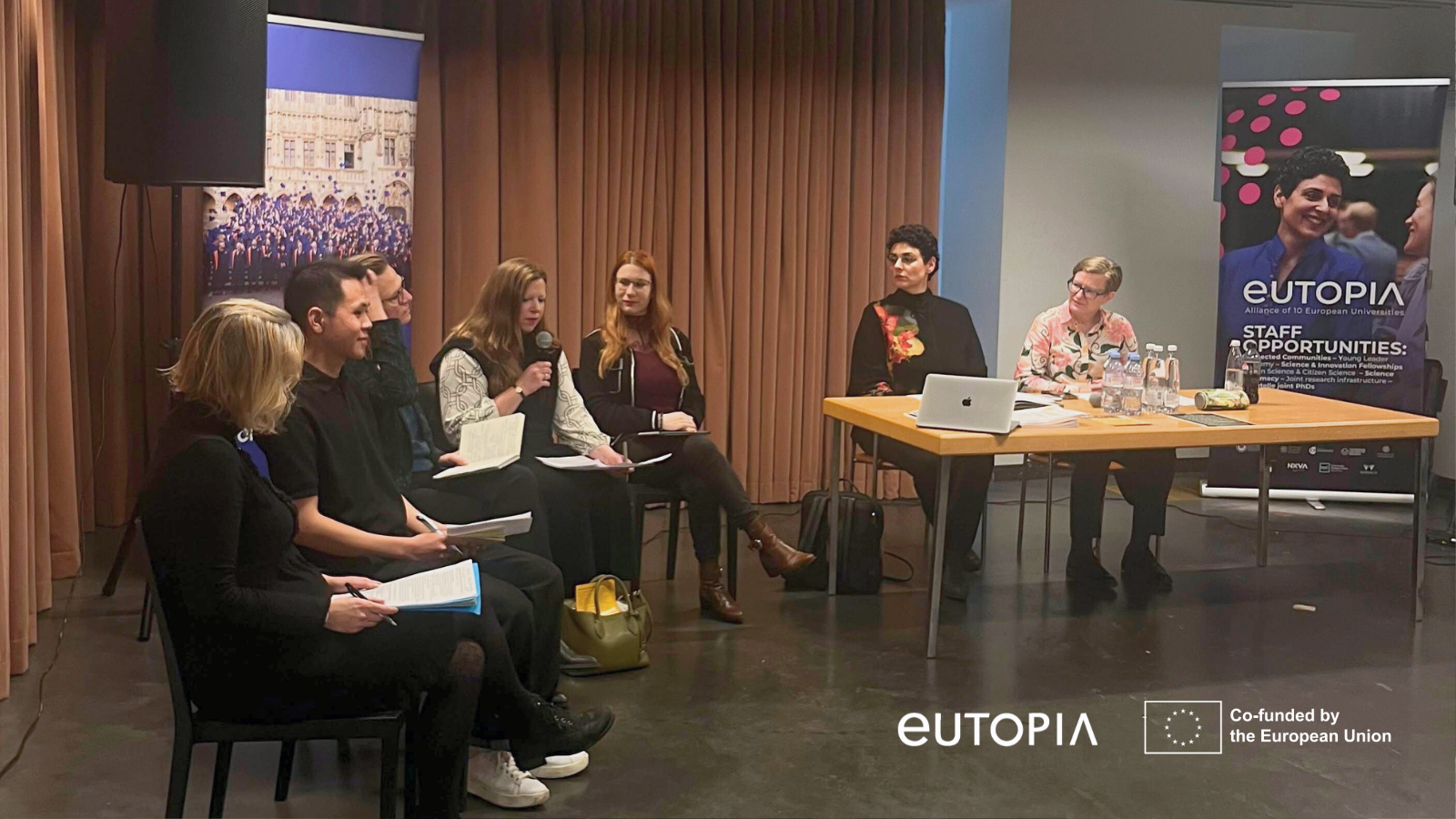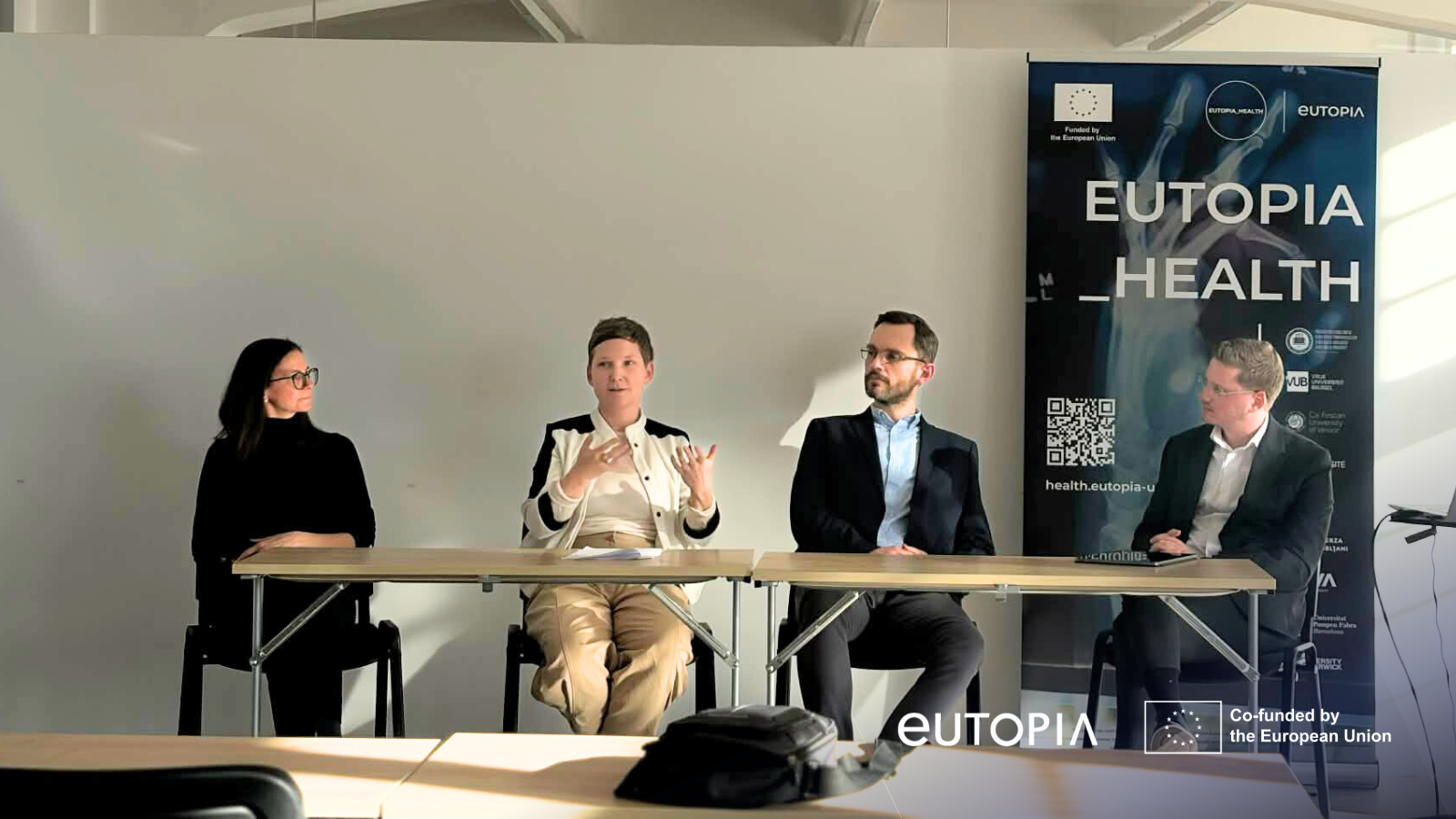
LJUBLJANA, March 11, 2026 – As part of the EUTOPIA_HEALTH project, the University of Ljubljana hosted EUTOPIA HEALTH day, dedicated to the intersection of clinical frameworks and digital innovation. The event brought together researchers and medical experts to discuss the transition from reactive to preventive healthcare models with digital tools.
Digital Tools in Clinical Practice
- Continuous Monitoring: Assoc. Prof. Dr. Milica Gregorič Kramberger emphasized that digital tools now allow for the ongoing tracking of conditions such as dementia and Parkinson’s disease, marking a major shift in long-term patient care.
- Social Robotics: Prof. Dr. Andrej Košir presented the evolving role of socially intelligent robots in providing care for the elderly.
The Role of HE Institutions in promoting Regulation
The second part of the consultation focused on “digital well-being”—the capacity to use technology to support mental and physical health. The discussion was moderated by prof. dr. Igor Švab from the Faculty of Medicine UL.
- Dr. Răzvan-Marius Predatu (University Babes-Bolyjai Cluj) presented different approaches as to how digital tools can be used to foster positive relationship rather than digital burden. He especially emphasized the role of academia in terms of establishing educational content on how to use digital tools efficiently without over over-bearing the user.
- Prof. Dr. Katja Koren Ošljak (Faculty of Social Sciences UL), noted that research shows young people feel a significant deficit in their ability to use digital tools effectively.
- Prof. Dr. Alja Videtič Paska (Faculty of Medicine UL) warned that the digital environment is no longer just an external factor but a biological one that influences our epigenome, necessitating a new scientific paradigm.
- Prof. Dr. Octavian Mihai Machidon (Faculty of Computer and Information Science) argued that rather than focusing solely on age limits, broader EU-level regulations are needed to hold social media companies accountable for their platforms’ impacts.
The session concluded with an agreement that while technology offers immense opportunities for medical progress, it requires a high degree of digital literacy and robust institutional guidelines.