Paris, 27 April 2026. Armando Uribe Echeverria
In the small and composed city of Opole, where the Oder moves slowly, one could be forgiven for thinking that nothing of geopolitical consequence might occur. Yet it is in such places—neither capitals nor peripheries, but something more civilised—that Europe has lately chosen to reflect upon one of its most delicate instruments: the quiet practice of knowledge as diplomacy.
The Forum, organised by the FORTHEM Alliance and hosted by the University of Opole, affirmed a significant shift in science diplomacy, which, as Rector Lipok noted, is now a central concept. The goal is to link academic research with diplomatic practice, moving beyond simple cooperation to what Piotr Kępski of NAWA termed “multilateral multi-dimensional cooperation.” This shift suggests that European universities are evolving into spaces balancing various academic, political, and cultural logics. Barbara Curyło, Head of the FORTHEM Centre, was instrumental in shaping this event, emphasising the need to “govern complexity” and demonstrating the principles of science diplomacy by embracing differences without losing cohesion.
It fell to Marina Cino Pagliarello—Research Fellow at the European University Institute in Florence, Senior Visiting Fellow at the London School of Economics, and a familiar presence in CIVICA Alliance circles—to articulate the implications of this shift. Universities, she argued, are already informal actors of diplomacy, and their relative invisibility is not a weakness but a condition of trust. Where formal diplomacy may falter, constrained by mandates and declarations, universities retain the capacity to maintain connections across frontiers. Her argument offered empirical grounding for what many in the Blue Hall seemed to recognise instinctively: that alliances generate trust, even if their diplomatic role remains insufficiently acknowledged. If there was a refrain to her contribution, it was that recognition must follow reality—that alliances should be understood not merely as instruments of cooperation, but as actors of governance in their own right.
The intellectual centre of gravity then shifted with Eric Piaget of EUTOPIA, who introduced Jean-François Doulet’s emerging paradigm for understanding science diplomacy. Before an audience composed of rectors, vice-rectors, alliance managers and doctoral students, he proposed an image that departed from the well-worn vocabulary of bridges and crossings. Science diplomacy, he suggested, might better be imagined as a buoy: anchored to the seabed, yet visible above shifting waters, a point of orientation amid contrary currents. It was a metaphor that resonated not because it resolved complexity, but because it acknowledged it without anxiety.
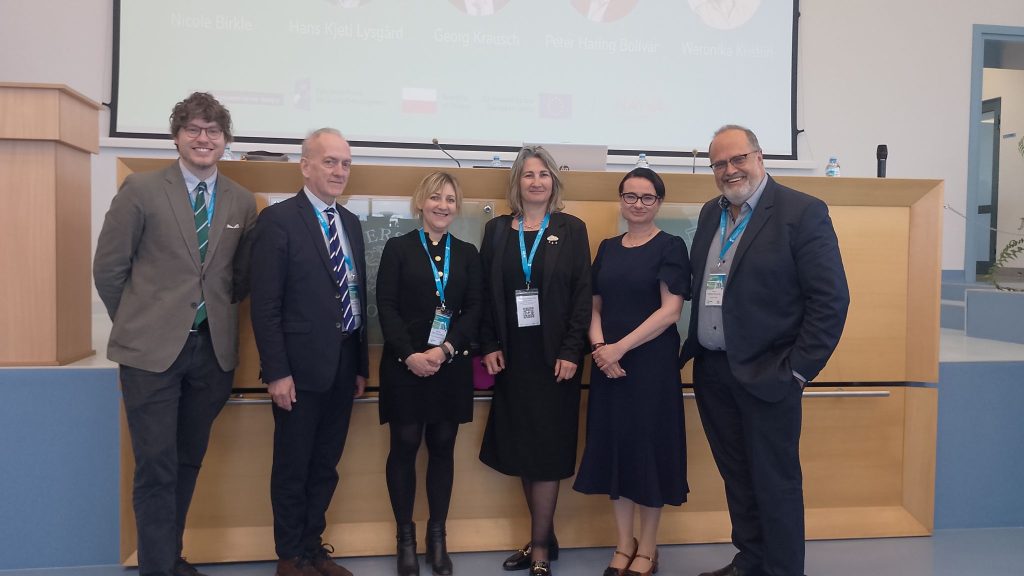
The panel on leadership and preparedness, moderated by FORTHEM Secretary-General Nicole Birkle, explored the practical tensions between openness and security amidst contemporary geopolitical uncertainties. The panellists emphasised the need to define openness clearly and examine when it might give way to closure. Hans Kjetil Lysgård Vice Rector from the University of Agder highlighted that collaboration does not exempt institutions from responsibility. Georg Krausch, President of Johannes Gutenberg University Mainz and Peter Haring Bolívar from the University of Siegen (ATHENA Alliance) stressed the importance of engaging without compromising academic independence and trust. Yet it was equally clear that the alliances themselves offer a particular resource in navigating these dilemmas. They “live for the differences”, as one participant put it, drawing strength from the friction of distinct academic cultures. Their human dimension—often underestimated in the language of European programmes—was repeatedly identified as their most significant asset. In alliances, responsibility is shared, and with it the capacity to absorb shocks: crises, it was observed, become more manageable when they are not borne alone. Academic freedom, in this context, was treated as a condition for the credibility of any diplomatic role universities might assume.
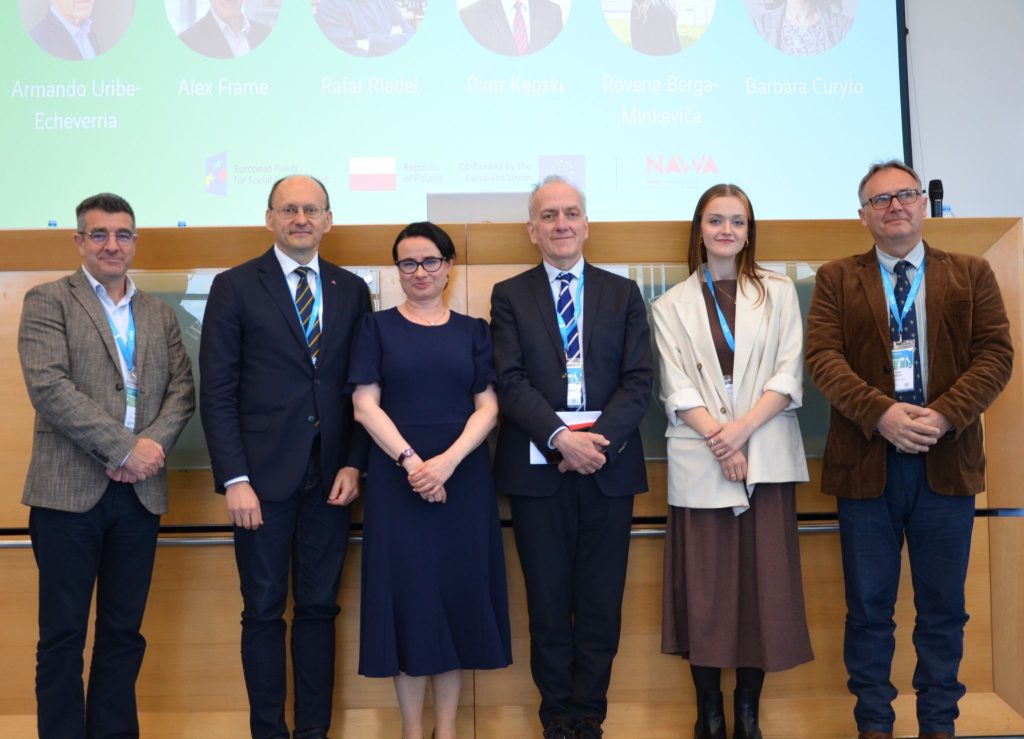
The afternoon brought a sharper and more granular focus. Panel 3 gathered scholars and practitioners to discuss stakeholder engagement within the alliances themselves and demonstrated that the topic resists simple formulation. Alex Frame of the University of Burgundy Europe traced how knowledge-creating teams within the FORTHEM Labs have functioned as quiet channels of diplomatic trust—constructing, through sustained intellectual labour, connections that formal instruments rarely achieve. Rafał Riedel of the University of Opole, drawing on his expertise in European Studies and his work for the European Research Council, examined how the Europeanisation of organised interests is, it turns out, not merely a complication of policy but a constitutive element of how European norms are made. Piotr Kępski of NAWA, who had opened the conference in the morning, returned in the afternoon to elaborate the Polish perspective with greater precision: international project implementation, he argued, is itself a form of science diplomacy, one that carries both opportunities and the constraints inherent in national policy frameworks. Rovena Berga-Minkeviča of the University of Latvia offered a cultural counterweight, drawing on Nordic-Baltic experiences of higher education cooperation to show that shared values are not assumed but cultivated—and that culture, when taken seriously, changes what cooperation can mean. Barbara Curyło, who had moderated the opening panel, concluded the discussion by turning the analytical lens upon alliance governance itself: multi-level coordination, she suggested, is not merely an administrative challenge but a constitutive feature of how European University Alliances manage—and, in managing, embody—the complexity that science diplomacy requires.
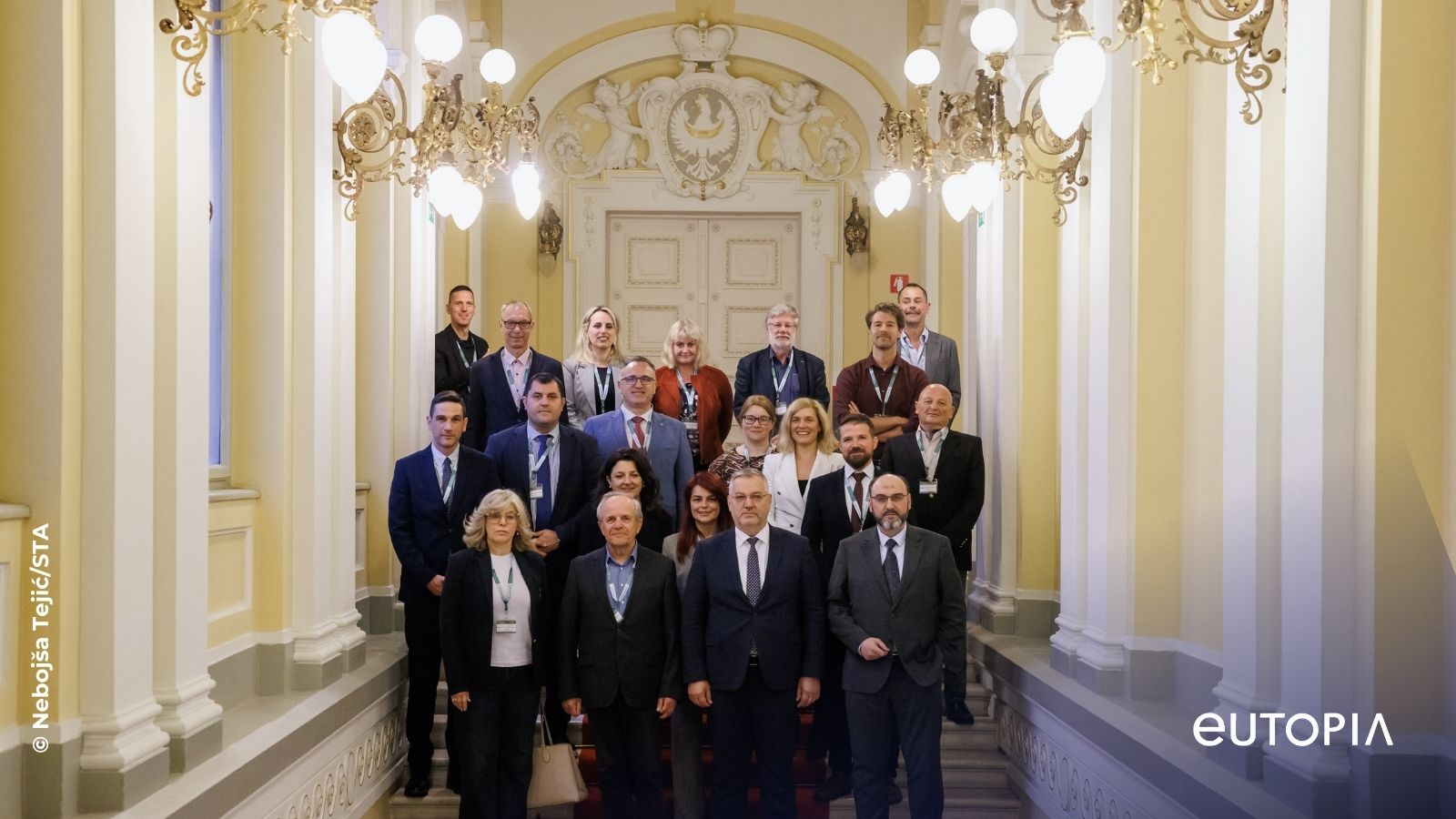
The conversations did not conclude with the formal programme. The following day, representatives of the FORTHEM Alliance, CIVICA Alliance, and EUTOPIA Alliance continued their exchanges on stakeholder engagement, exceeding the allotted time. The prospect of extending this dialogue into a policy paper was raised. For if alliances are to be recognised as diplomatic actors, they must also learn to articulate the conditions of their own effectiveness.
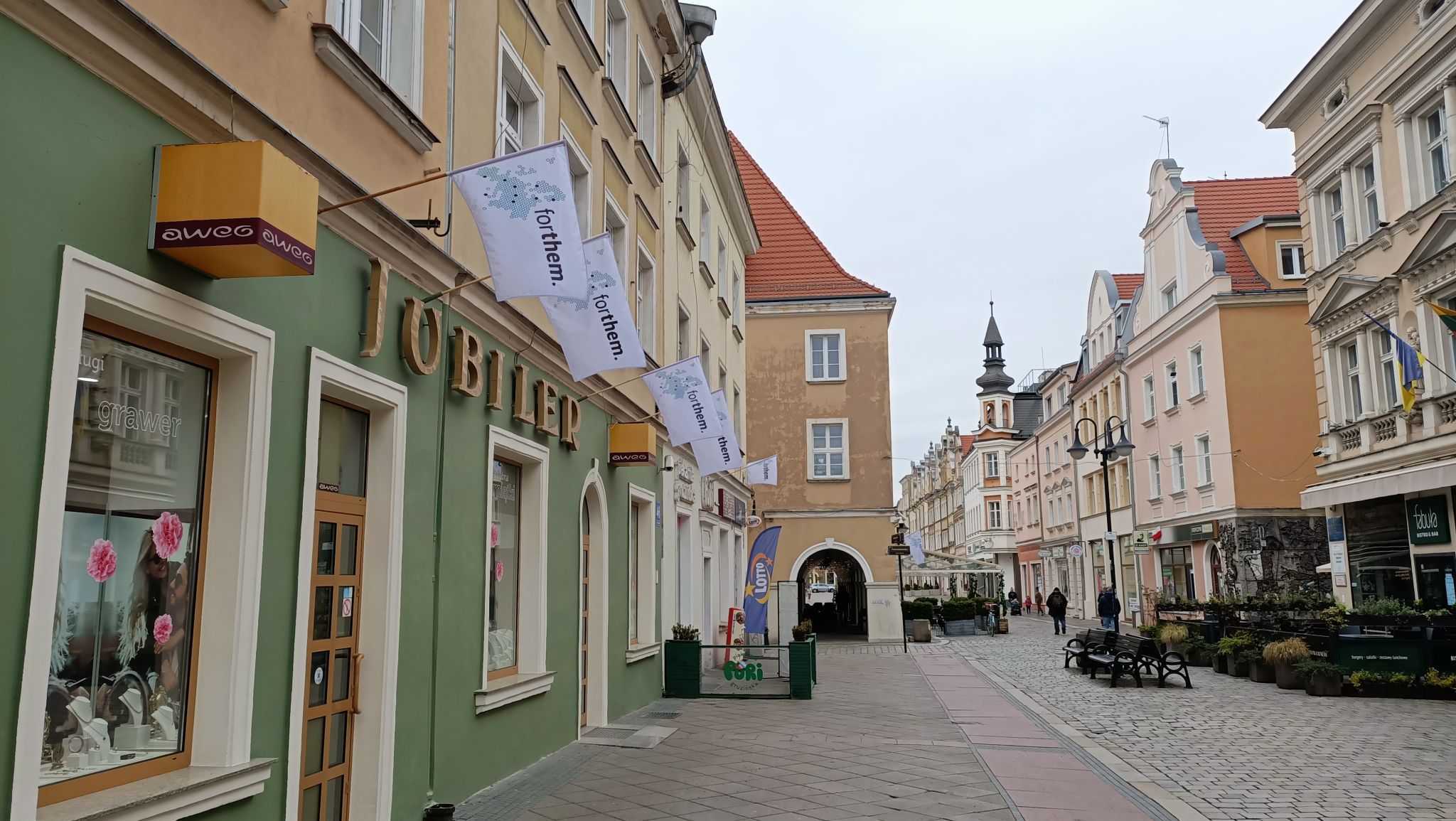
Beyond the conference hall, the city offered its own commentary. The municipal authorities had adorned the historic centre with the flags of the FORTHEM Alliance—a gesture modest in scale yet rich in implication. These banners did not proclaim conquest nor a celebration. They signalled a form of assent to knowledge, to its circulation, and to the belief that such action constitutes, in itself, a public good. In Opole, then, one glimpsed a Europe that does not announce itself with fanfare. It proceeds instead through conversations, through alliances that are at once fragile and resilient, and through a diplomacy that chooses to be practised before it is proclaimed.